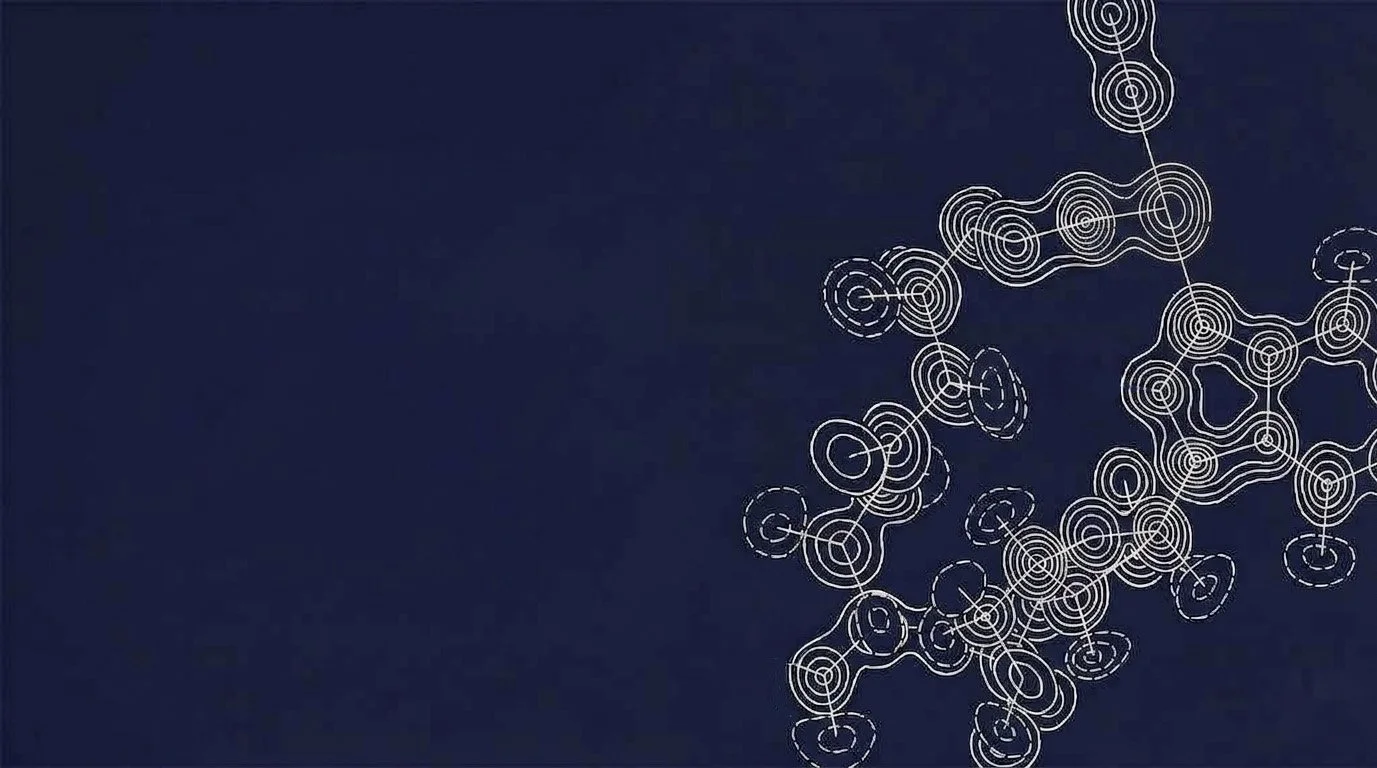
The architecture
of life, revealed.
Exploring the scientific legacy, archival papers, and collaborative network of Britain’s only female Nobel laureate in science.
Currently in Research Phase
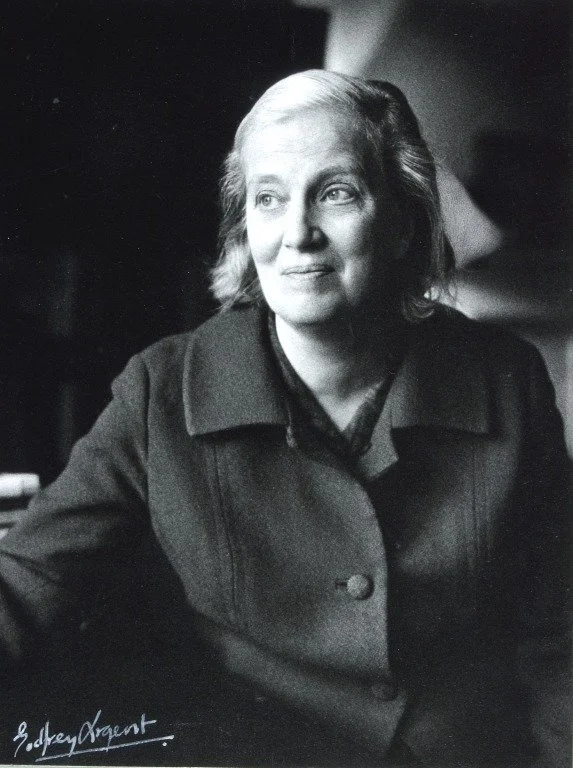
Portrait of Dorothy Hodgkin in 1969, the year her team determined the structure of insulin.
She solved the structures of penicillin, vitamin B12, and insulin.
Dorothy Crowfoot Hodgkin was a British chemist and X-ray crystallographer who revealed the atomic architecture of molecules that had never been seen.
She determined the structure of penicillin, opening the door to the wave of derivative drugs that followed. She solved vitamin B12 — a molecule so complex that many believed its structure was beyond reach, and whose elucidation enabled the treatment of a fatal form of anemia. And she spent thirty-five years pursuing the structure of insulin, a problem she first encountered as a graduate student and refused to abandon until she had the answer.
Along the way, she pioneered the very techniques that made these achievements possible — advancing the methods of X-ray crystallography to the point where her approaches became the foundation on which the field itself was built.
In 1964, she was awarded the Nobel Prize in Chemistry. She remains the only British woman ever to receive it.
photo credit: © The Royal Society, image RS.6422One of the most decorated scientists in history.
One of the least known.
Hodgkin never sought the spotlight for herself. She built teams — assembling collaborators across disciplines, institutions, and national borders. She elevated her students and colleagues, many of whom went on to distinguished careers built on foundations she laid. She was a leader of unusual generosity and intellectual humility — the kind of scientist whose influence multiplied through everyone she worked with.
She was also a woman working against the deep structural barriers of mid-century British academia — elected a Fellow of the Royal Society while still denied the dining rights of her male colleagues at Oxford. She worked through debilitating rheumatoid arthritis for most of her career. And she was an internationalist and peace activist, maintaining scientific relationships across the Iron Curtain at a time when those convictions carried real professional cost.
Her story has all the elements of a great one. It deserves to be told in a way that brings her fully to life for a wide audience. That is what The Dorothy Hodgkin Exhibit exists to do.
The Dorothy Hodgkin Exhibit is being developed to bring Hodgkin's extraordinary life and work to a broad audience — and to inspire a new generation through an exciting digital experience.
Almost everything written by and about Hodgkin and her science is locked behind specialist language that makes her achievements inaccessible to many of the people who would find them meaningful. The Exhibit exists to change that.
This will be a modern, interactive resource designed to bring the life of an extraordinary person into full view. The science explained in terms that any curious reader can follow, without sacrificing the substance of what made it so difficult and why it mattered. The relationships that shaped twentieth-century crystallography. The full human story of a pioneer, collaborator, mentor, and activist whose influence extended far beyond her own discoveries.
The project draws on the extensive Hodgkin papers held at the Bodleian Library, Oxford, and at the Royal Society, London, alongside a wide survey of published primary and secondary sources. It is designed for curious readers, students, educators, and young scientists — anyone who encounters Dorothy Hodgkin's name and desires a place to go that's worthy of her story.
Introducing
The Dorothy Hodgkin Exhibit.
About this Project

The Dorothy Hodgkin Exhibit is led by Dave Panos, an American entrepreneur who spent years building companies from ideas that didn't yet exist and who recognized in Hodgkin's story a similar opportunity: something important that should be in the world, but isn't. He is now channeling that same energy into a new chapter as a historical researcher and writer.
This effort builds upon a career spanning three decades of founding, leading, and advising internet and technology ventures. He holds an MBA from Harvard Business School and is a graduate of Furman University, where he earned Phi Beta Kappa honors. He brings to this project the same instincts that defined his professional life — identifying what's missing, assembling the right people and resources, and doing the hard work to bring something new into existence.
The project is grounded in primary source research — Hodgkin's own papers, letters, lectures, and published writings — and draws on the extensive archival holdings at the Bodleian Library and the Royal Society. It is a serious, long-term undertaking, and one Panos believes will be among the most meaningful work of his career.